Category: Uncategorized

  • Whales: Giants of the Ocean

    Whales: Giants of the Ocean

    Whales are among the largest and most remarkable animals on Earth. These marine mammals live in oceans around the world, from warm tropical waters to the cold seas surrounding the poles.

    Life Beneath the Surface

    Although whales spend their lives in water, they breathe air through blowholes located on top of their heads. They must regularly return to the surface to breathe before diving again in search of food or traveling through the ocean.

    Whales are warm-blooded, give birth to live young, and nurse their calves with milk. A thick layer of fat called blubber helps protect them from cold water and stores energy during long migrations.

    Two Main Groups

    Whales are generally divided into baleen whales and toothed whales. Baleen whales filter small animals from the water using flexible plates inside their mouths. This group includes blue whales, humpback whales, and gray whales.

    Toothed whales use teeth to catch fish, squid, and other prey. Many of them also use echolocation, producing sounds and listening for returning echoes to understand their surroundings. Sperm whales, belugas, and orcas belong to this group.

    The Blue Whale

    The blue whale is the largest known animal to have ever lived. An adult can grow longer than a city bus and weigh well over one hundred tonnes. Despite its enormous size, it feeds mainly on tiny crustaceans called krill.

    Communication and Migration

    Whales communicate using clicks, whistles, pulses, and complex songs. Some sounds can travel across great distances underwater. Humpback whales are especially famous for their long, patterned songs.

    Many species migrate thousands of kilometres each year. They often feed in cold, nutrient-rich waters before traveling to warmer regions where they mate and give birth.

    Protecting Whales

    Commercial hunting once caused severe declines in many whale populations. Today, whales also face threats from fishing gear, ship collisions, underwater noise, pollution, and changes to ocean ecosystems.

    Conservation programs, safer fishing practices, protected habitats, and international cooperation can help whale populations recover. Protecting whales also supports healthier oceans because these animals play an important role in marine food webs and nutrient cycles.
  • Whales: Giants of the Ocean

    Whales: Giants of the Ocean

    Whales are among the largest and most remarkable animals on Earth. These marine mammals live in oceans around the world, from warm tropical waters to the cold seas surrounding the poles.

    Life Beneath the Surface

    Although whales spend their lives in water, they breathe air through blowholes located on top of their heads. They must regularly return to the surface to breathe before diving again in search of food or traveling through the ocean.

    Whales are warm-blooded, give birth to live young, and nurse their calves with milk. A thick layer of fat called blubber helps protect them from cold water and stores energy during long migrations.

    Two Main Groups

    Whales are generally divided into baleen whales and toothed whales. Baleen whales filter small animals from the water using flexible plates inside their mouths. This group includes blue whales, humpback whales, and gray whales.

    Toothed whales use teeth to catch fish, squid, and other prey. Many of them also use echolocation, producing sounds and listening for returning echoes to understand their surroundings. Sperm whales, belugas, and orcas belong to this group.

    The Blue Whale

    The blue whale is the largest known animal to have ever lived. An adult can grow longer than a city bus and weigh well over one hundred tonnes. Despite its enormous size, it feeds mainly on tiny crustaceans called krill.

    Communication and Migration

    Whales communicate using clicks, whistles, pulses, and complex songs. Some sounds can travel across great distances underwater. Humpback whales are especially famous for their long, patterned songs.

    Many species migrate thousands of kilometres each year. They often feed in cold, nutrient-rich waters before traveling to warmer regions where they mate and give birth.

    Protecting Whales

    Commercial hunting once caused severe declines in many whale populations. Today, whales also face threats from fishing gear, ship collisions, underwater noise, pollution, and changes to ocean ecosystems.

    Conservation programs, safer fishing practices, protected habitats, and international cooperation can help whale populations recover. Protecting whales also supports healthier oceans because these animals play an important role in marine food webs and nutrient cycles.

  • Whales: Giants of the Ocean

    Whales: Giants of the Ocean

    Whales are among the largest and most remarkable animals on Earth. These marine mammals live in oceans around the world, from warm tropical waters to the cold seas surrounding the poles.

    Life Beneath the Surface

    Although whales spend their lives in water, they breathe air through blowholes located on top of their heads. They must regularly return to the surface to breathe before diving again in search of food or traveling through the ocean.

    Whales are warm-blooded, give birth to live young, and nurse their calves with milk. A thick layer of fat called blubber helps protect them from cold water and stores energy during long migrations.

    Two Main Groups

    Whales are generally divided into baleen whales and toothed whales. Baleen whales filter small animals from the water using flexible plates inside their mouths. This group includes blue whales, humpback whales, and gray whales.

    Toothed whales use teeth to catch fish, squid, and other prey. Many of them also use echolocation, producing sounds and listening for returning echoes to understand their surroundings. Sperm whales, belugas, and orcas belong to this group.

    The Blue Whale

    The blue whale is the largest known animal to have ever lived. An adult can grow longer than a city bus and weigh well over one hundred tonnes. Despite its enormous size, it feeds mainly on tiny crustaceans called krill.

    Communication and Migration

    Whales communicate using clicks, whistles, pulses, and complex songs. Some sounds can travel across great distances underwater. Humpback whales are especially famous for their long, patterned songs.

    Many species migrate thousands of kilometres each year. They often feed in cold, nutrient-rich waters before traveling to warmer regions where they mate and give birth.

    Protecting Whales

    Commercial hunting once caused severe declines in many whale populations. Today, whales also face threats from fishing gear, ship collisions, underwater noise, pollution, and changes to ocean ecosystems.

    Conservation programs, safer fishing practices, protected habitats, and international cooperation can help whale populations recover. Protecting whales also supports healthier oceans because these animals play an important role in marine food webs and nutrient cycles.

  • Whales: Giants of the Ocean

    Whales: Giants of the Ocean

    Whales are among the largest and most remarkable animals on Earth. These marine mammals live in oceans around the world, from warm tropical waters to the cold seas surrounding the poles.

    Life Beneath the Surface

    Although whales spend their lives in water, they breathe air through blowholes located on top of their heads. They must regularly return to the surface to breathe before diving again in search of food or traveling through the ocean.

    Whales are warm-blooded, give birth to live young, and nurse their calves with milk. A thick layer of fat called blubber helps protect them from cold water and stores energy during long migrations.

    Two Main Groups

    Whales are generally divided into baleen whales and toothed whales. Baleen whales filter small animals from the water using flexible plates inside their mouths. This group includes blue whales, humpback whales, and gray whales.

    Toothed whales use teeth to catch fish, squid, and other prey. Many of them also use echolocation, producing sounds and listening for returning echoes to understand their surroundings. Sperm whales, belugas, and orcas belong to this group.

    The Blue Whale

    The blue whale is the largest known animal to have ever lived. An adult can grow longer than a city bus and weigh well over one hundred tonnes. Despite its enormous size, it feeds mainly on tiny crustaceans called krill.

    Communication and Migration

    Whales communicate using clicks, whistles, pulses, and complex songs. Some sounds can travel across great distances underwater. Humpback whales are especially famous for their long, patterned songs.

    Many species migrate thousands of kilometres each year. They often feed in cold, nutrient-rich waters before traveling to warmer regions where they mate and give birth.

    Protecting Whales

    Commercial hunting once caused severe declines in many whale populations. Today, whales also face threats from fishing gear, ship collisions, underwater noise, pollution, and changes to ocean ecosystems.

    Conservation programs, safer fishing practices, protected habitats, and international cooperation can help whale populations recover. Protecting whales also supports healthier oceans because these animals play an important role in marine food webs and nutrient cycles.

  • Whales: Giants of the Ocean

    Whales: Giants of the Ocean

    Whales are among the largest and most remarkable animals on Earth. These marine mammals live in oceans around the world, from warm tropical waters to the cold seas surrounding the poles.

    Life Beneath the Surface

    Although whales spend their lives in water, they breathe air through blowholes located on top of their heads. They must regularly return to the surface to breathe before diving again in search of food or traveling through the ocean.

    Whales are warm-blooded, give birth to live young, and nurse their calves with milk. A thick layer of fat called blubber helps protect them from cold water and stores energy during long migrations.

    Two Main Groups

    Whales are generally divided into baleen whales and toothed whales. Baleen whales filter small animals from the water using flexible plates inside their mouths. This group includes blue whales, humpback whales, and gray whales.

    Toothed whales use teeth to catch fish, squid, and other prey. Many of them also use echolocation, producing sounds and listening for returning echoes to understand their surroundings. Sperm whales, belugas, and orcas belong to this group.

    The Blue Whale

    The blue whale is the largest known animal to have ever lived. An adult can grow longer than a city bus and weigh well over one hundred tonnes. Despite its enormous size, it feeds mainly on tiny crustaceans called krill.

    Communication and Migration

    Whales communicate using clicks, whistles, pulses, and complex songs. Some sounds can travel across great distances underwater. Humpback whales are especially famous for their long, patterned songs.

    Many species migrate thousands of kilometres each year. They often feed in cold, nutrient-rich waters before traveling to warmer regions where they mate and give birth.

    Protecting Whales

    Commercial hunting once caused severe declines in many whale populations. Today, whales also face threats from fishing gear, ship collisions, underwater noise, pollution, and changes to ocean ecosystems.

    Conservation programs, safer fishing practices, protected habitats, and international cooperation can help whale populations recover. Protecting whales also supports healthier oceans because these animals play an important role in marine food webs and nutrient cycles.

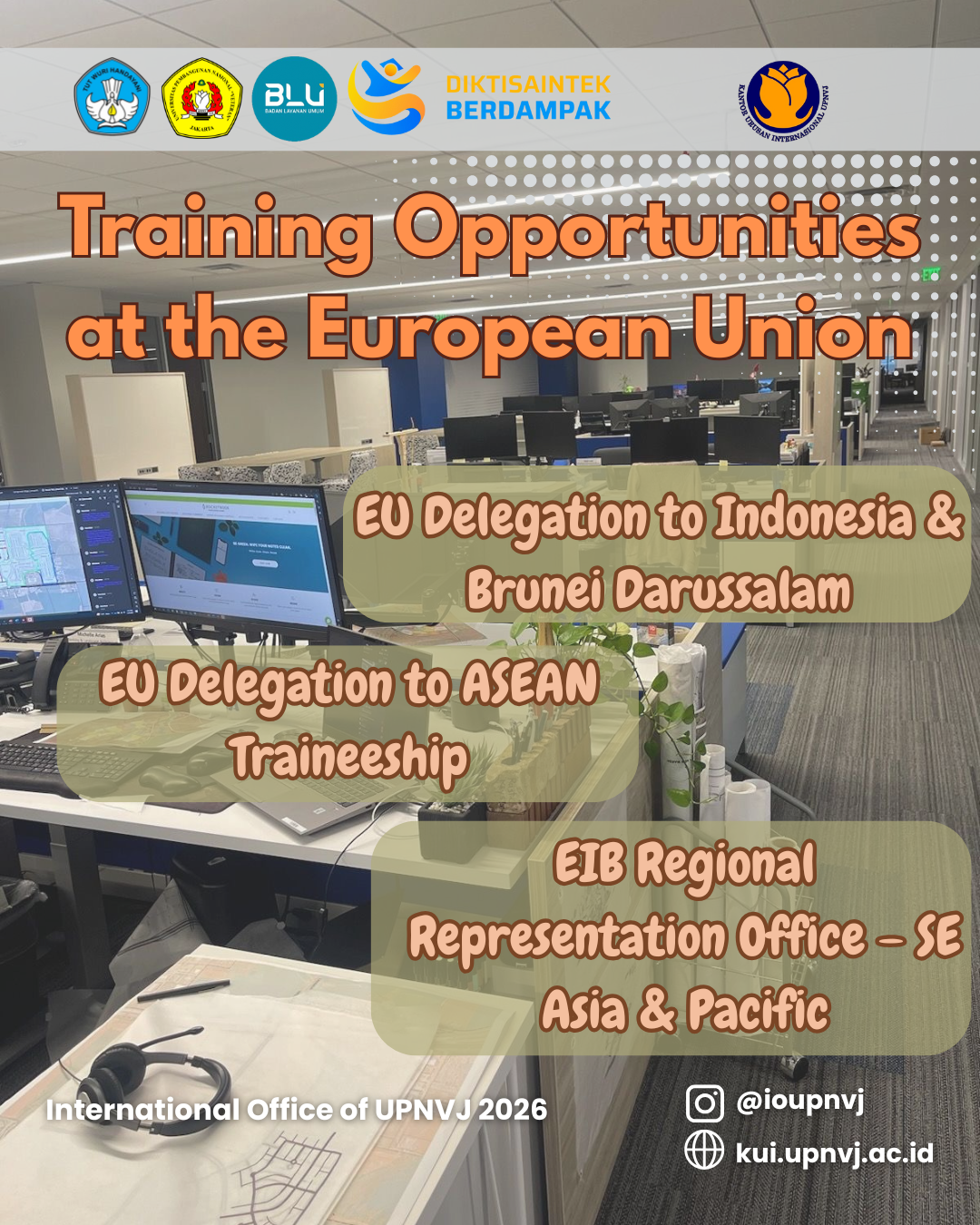
  • Kesempatan Traineeship bagi Mahasiswa UPNVJ: EU Funded Traineeship Programme 2026 Resmi Dibuka

    Kesempatan Traineeship bagi Mahasiswa UPNVJ: EU Funded Traineeship Programme 2026 Resmi Dibuka

    Kantor Urusan Internasional Universitas Pembangunan Nasional “Veteran” Jakarta (KUI UPNVJ) menyampaikan informasi pembukaan EU Funded Traineeship Programme 2026, sebuah program magang internasional yang didanai oleh Uni Eropa dan ditujukan bagi lulusan muda yang berminat mengembangkan karier di bidang diplomasi, kebijakan publik, dan kerja sama internasional.

    Program traineeship ini memberikan kesempatan bagi peserta terpilih untuk memperoleh pengalaman langsung di lingkungan kerja internasional melalui penempatan di EU Delegation to Indonesia & Brunei Darussalam, EU Delegation to ASEAN, serta European Investment Bank (EIB) Regional Representation Office di Jakarta. Selama program berlangsung, peserta akan terlibat dalam berbagai kegiatan strategis yang berkaitan dengan diplomasi dan kebijakan Uni Eropa di kawasan Asia Tenggara.

    Melalui program ini, peserta akan mendapatkan paparan praktis mengenai kerja misi diplomatik Uni Eropa, terlibat dalam kegiatan riset kebijakan, pelaporan, dan komunikasi, serta bekerja dalam lingkungan profesional yang multikultural. Traineeship ini diharapkan dapat menjadi sarana pengembangan kompetensi bagi lulusan muda yang tertarik pada isu hubungan internasional dan kerja sama global.

    Kriteria Pendaftar

    Program ini terbuka bagi lulusan Sarjana (Bachelor’s degree) yang memiliki pengalaman kerja kurang dari satu tahun setelah kelulusan, saat ini berdomisili di Indonesia, serta memiliki minat yang kuat di bidang hubungan internasional, diplomasi, dan kebijakan publik.

    Persyaratan Aplikasi

    Pelamar diwajibkan menyiapkan dokumen sebagai berikut:

    1. Europass Curriculum Vitae (CV)
    2. Motivation Letter
    3. Application Form

    Durasi Program

    EU Funded Traineeship Programme dilaksanakan selama 3 hingga 6 bulan, dengan jadwal mulai pada Maret/April 2026 atau Oktober 2026, tergantung pada penempatan dan kebutuhan unit kerja.

    Informasi lengkap mengenai program dan tautan pendaftaran dapat diakses melalui laman berikut: http://link.europe.eu/nvPvfy

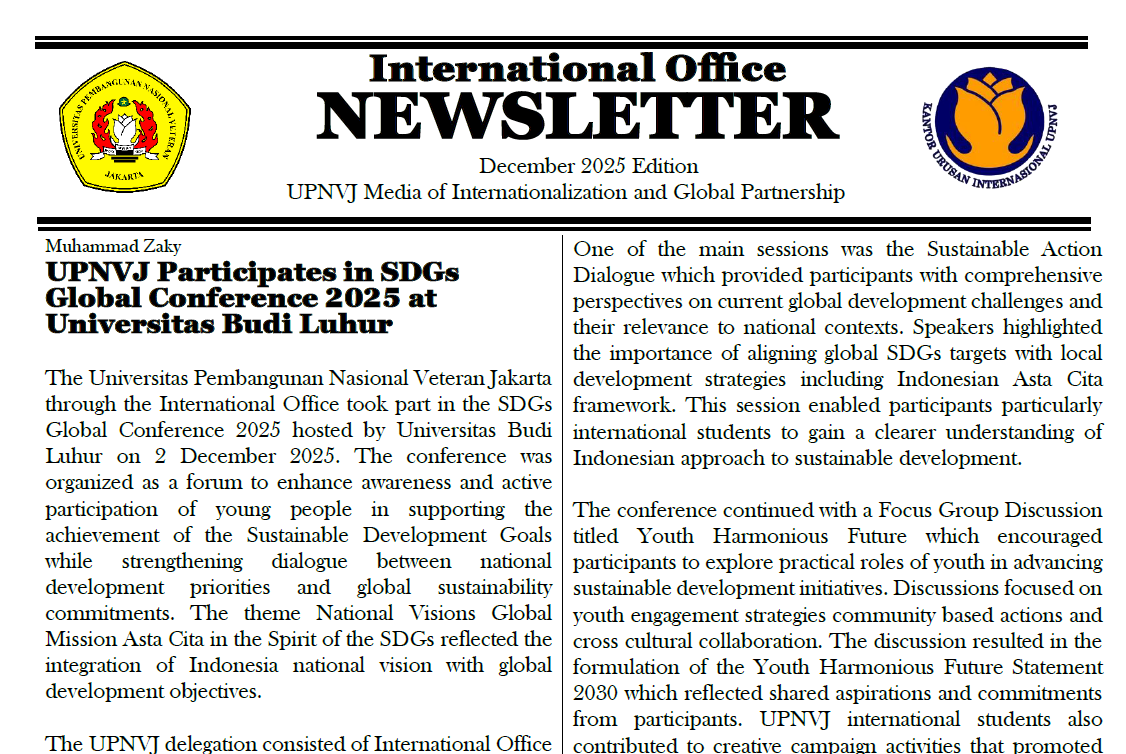
  • Newsletter KUI UPNVJ Edisi Desember 2025

    Newsletter KUI UPNVJ Edisi Desember 2025

    Kantor Urusan Internasional (KUI) Universitas Pembangunan Nasional “Veteran” Jakarta (UPNVJ) kembali menerbitkan Newsletter edisi Desember 2025 yang merangkum berbagai kegiatan internasionalisasi sepanjang bulan Desember. Melalui edisi ini, UPNVJ menegaskan komitmennya dalam memperkuat layanan bagi mahasiswa asing sekaligus membuka ruang kolaborasi global. Newsletter Edisi Desember 2025 dapat diakses melalui tautan berikut https://drive.google.com/file/d/16Fc2QrHj2EHcGs_V6wbLg57M47dioH_n/view?usp=sharing

  • Newsletter Edisi Desember 2024 : Highlight 2024

    Pengumuman Terakhir IISMA 2024 dan IISMA Co-Funding 2024 UPNVJ mencatat pencapaian luar biasa dengan berhasil mengirimkan 19 penerima beasiswa IISMA 2024 dan 6 penerima beasiswa IISMA Co-Funding 2024. Program IISMA ini terus berkembang, dengan jumlah penerima beasiswa meningkat setiap tahun, dimulai dari 8 penerima pada tahun 2021 hingga 25 penerima pada tahun 2024. Sebagai bagian dari perayaan ini, UPNVJ mengadakan acara penyambutan untuk alumni IISMA 2023 dan inisiasi untuk penerima beasiswa 2024 pada 27 Maret 2024. Acara ini dilanjutkan dengan briefing persiapan keberangkatan pada April 2024.

    UPNVJ Pre-Departure Briefing untuk Wilayah Uni Eropa dan Rusia Kantor Urusan Internasional (KUI) UPNVJ juga menyelenggarakan briefing pra-keberangkatan untuk siswa IISMA 2024 yang akan berangkat ke wilayah Uni Eropa dan Rusia. Acara ini bertujuan untuk mempersiapkan mahasiswa dalam menjalani program akademik mereka di luar negeri.

    Pendirian Pusat Studi Asia Tengah di UPNVJ Sebagai upaya memperluas kolaborasi akademik internasional, UPNVJ meresmikan Pusat Studi Asia Tengah pada 30 Agustus 2024. Pusat ini bertujuan untuk memperdalam hubungan akademik dan budaya dengan negara-negara Asia Tengah. Acara peluncuran dihadiri oleh duta besar dari Kazakhstan, Azerbaijan, Georgia, Uzbekistan, dan Mongolia, serta sejumlah pejabat dari Kementerian Luar Negeri Indonesia. Pusat Studi ini diharapkan dapat memperkuat kerjasama internasional Indonesia dengan negara-negara di Asia Tengah melalui riset, dialog, dan pertukaran budaya.

    Kunjungan UPNVJ ke Manila untuk Memperkuat Kolaborasi Internasional Pada 22 Juli 2024, UPNVJ melakukan kunjungan strategis ke Kedutaan Besar Indonesia di Manila untuk memperkuat kerjasama akademik dengan institusi pendidikan Filipina. Delegasi ini dipimpin oleh Dr. Bambang Susanto, Kepala Kantor Urusan Internasional UPNVJ, dan mencakup pembicaraan dengan dua universitas Filipina terkemuka: De La Salle College of Saint Benilde, Manila, dan Central Mindanao Colleges (CMC). Kunjungan ini diharapkan dapat membuka lebih banyak peluang untuk pertukaran pelajar, proyek penelitian bersama, dan inisiatif layanan masyarakat.

    Penguatan Kolaborasi Budaya dan Pendidikan dengan Filipina Selama kunjungan ke Manila, UPNVJ juga menjalin hubungan lebih erat dengan Kedutaan Indonesia di Manila dan institusi pendidikan Filipina untuk memperkenalkan lebih banyak program pertukaran budaya dan akademik. Kolaborasi ini diharapkan dapat meningkatkan pemahaman antar budaya dan memperkuat hubungan bilateral antara Indonesia dan Filipina.

    Newsletter dapat diakses melalui tautan berikut https://drive.google.com/file/d/1I1qpBFnMme_VMbSuvcupEf6Glw7HmQet/view?usp=drive_link